Building a Career Like a Custom PC
Rebuilding a custom PC reminded me how startups and careers really work. Every part—from tools to teamwork—has to connect, adapt, and execute under pressure. Here’s what building computers taught me about building systems that scale.
STARTUPSCAREER
Alexander Pau
11/1/20255 min read
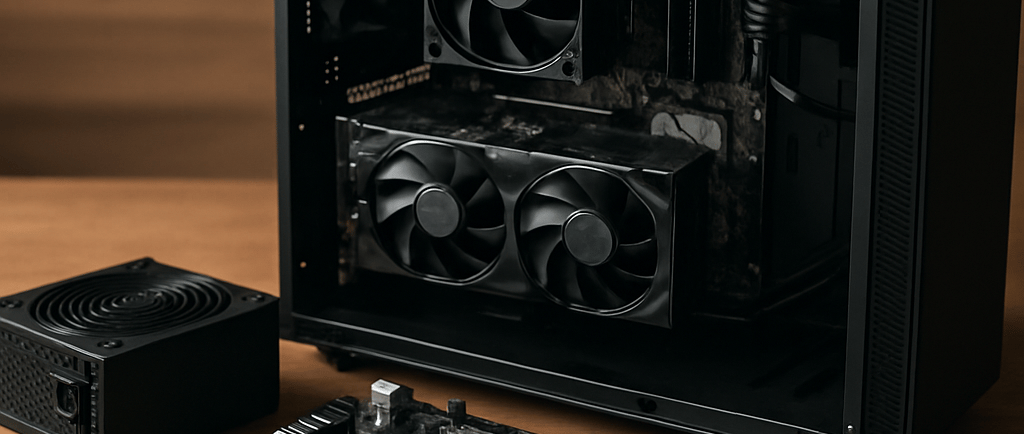
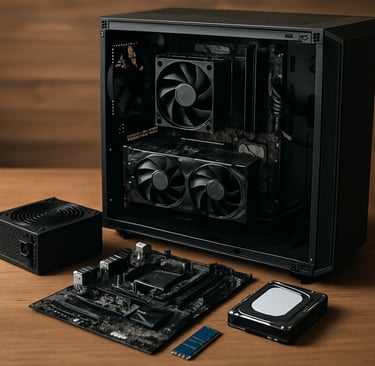
A few weeks ago, my old computer finally gave out.
No warning, no error codes, just a quiet click, a black screen, and that sinking feeling that only people who’ve built their own rigs know.
So I did what I’ve done since I was a kid: I started planning a new build.
Finding parts, comparing specs, balancing power with efficiency, I’ve always found that process oddly calming. But this time, something clicked differently. As I laid out the motherboard, the CPU, the cooler — I realized the same principles I use to build a PC are the ones I’ve used to execute inside startups.
Every system, whether it’s a computer or a team, only works if the parts talk to each other.
1. Start with the Motherboard: The Operating Model
In startups, the “motherboard” isn’t a piece of hardware, it’s your operating model. The system that defines how ideas move, how decisions are made, and where accountability lives.
Most people don’t see it, but it connects everything: your sales process, your product roadmap, your internal tools. If you’ve ever worked in a place where people are “busy” but progress is unclear, that’s a missing motherboard.
When I joined one startup, there were Asana boards, Miro templates, and half-finished spreadsheets everywhere. Nothing connected. We fixed it by implementing a clear Confluence + Jira structure — a move that, like installing a proper BIOS, stabilized everything. It’s the same kind of foundation I wrote about in The Only Project Management Showdown You Need in 2025 — where the right structure doesn’t slow you down; it frees you up to actually execute.
Without that base, all the high-end talent, tools, and tech in the world won’t make a difference. It’s just static.
2. Match Your Components: The Team You Build Matters
When you build a PC, you don’t just buy the best parts, you buy parts that work together. A 7000-series CPU is useless if your board only supports DDR4 RAM.
Startups mess this up all the time.
They’ll hire a growth lead who’s a performance marketing genius, but the product team has no analytics pipeline. Or they’ll bring in a data scientist before there’s even clean data. That mismatch creates lag, literal human bottlenecks.
The best founders I’ve worked with think like system builders. They don’t chase “top specs”; they look for compatibility. It’s a mindset I touched on in Fake It Till You Make It: The Startup and Career Pivot Survival Skill Nobody Admits They’re Using — because the best operators don’t fake confidence; they fake configuration knowledge until they learn it for real.
Execution is about balance. A lean, well-cooled mid-range build will always outperform a flashy, unstable one.
3. Power Supply: Energy and Burnout Are Real
You can’t power a 4070 Ti with a 400W PSU and expect it to last. Same goes for people.
Startups talk a lot about “hustle” and “grind,” but in reality, your energy management is your power supply. I’ve seen incredible founders crash because they tried to scale without upgrading their own systems, no rest, no mental reset, no process.
That’s where personal ops habits come in. You don’t need a perfect productivity system; you need one that fits your wattage. My setup looks a lot like what I shared in The Sharp Starts Tracking Playbook: How I Actually Keep Track of Things — simple, transparent, and built to handle the load without frying the circuits.
Burnout doesn’t happen because you’re weak; it happens because your PSU wasn’t rated for the workload.
4. The Cooling System: Feedback and Iteration
In PC builds, cooling is invisible until it fails. That’s feedback in startups.
If your feedback loops are slow or nonexistent, heat builds up — frustration, misalignment, wasted effort.
\A strong feedback system, like a good fan curve, keeps everyone operating within safe temps.
That’s why agile retros, post-mortems, and weekly reviews aren’t corporate rituals, they’re heat management systems.
As Harvard Business Review once put it in their piece on How Learning Loops Drive Organizational Agility, it’s not about moving faster; it’s about cooling faster between cycles.
5. The GPU: The Output Everyone Sees
Your GPU is what renders your vision, literally.
In startups, that’s your customer-facing impact. The design, the storytelling, the brand.
I’ve seen teams obsess over internal efficiency while their messaging is incoherent. That’s like running a powerhouse GPU with outdated drivers.
Your external output should scale with your internal clarity — not the other way around.
That’s why founders who focus on storytelling early usually survive longer. A 2023 study by First Round Review highlighted that the most resilient startups are the ones that connect their internal operating rhythm with how they communicate externally. Same architecture, different layers.
6. The Case: The Culture You Build Around It
You can build the most powerful rig in the world, but if your case traps heat or blocks airflow, it’s going to throttle.
Culture works the same way. It’s not what’s inside the box; it’s how everything inside interacts.
I’ve worked in startups where every meeting felt like a stress test — and others where transparency and humility acted like open airflow.
The difference wasn’t perks; it was servant leadership. Real leaders make sure everyone else’s components can perform at full speed. That’s the core of Why Servant Leadership Is the Only Kind That Actually Works — and it’s as true in business as it is in hardware.
7. Assembly: Execution Is a Contact Sport
Putting a PC together isn’t glamorous. It’s screws, cables, and sometimes blood on the knuckles.
Startups are the same — execution is messy. You can plan forever, but the system doesn’t stabilize until you hit the power button.
And that’s the thing nobody tells you: every build is temporary. Eventually, something fails, something needs an upgrade, and you start again.
That’s not failure — it’s versioning.
Final Boot
When my new PC finally powered on, fans spinning, BIOS lighting up clean, it reminded me why I still love this stuff.
Not the hardware, but the building part.
Because that’s what good operators do. We build, test, tweak, and rebuild again. Whether it’s systems, teams, or careers, the process doesn’t change, just the specs.
📚Further Reading
The Beginner’s Guide to AI: What Startups and Career Pivoters Actually Need to Know — A grounded look at where AI fits in modern execution systems.
Focus Like a Founder: How to Beat Distractions When Everything Wants Your Attention — How to maintain clarity when the system starts to lag.
From Box Scores to OKRs: How the Blue Jays’ Playoff Run Turned Me Into a Data-Driven Operator — Turning metrics into motivation.
Harvard Business Review – What Makes a Great Startup Team — A study on complementary skills and team chemistry.
TechCrunch – Building a startup is like building a house — Why building foundations early saves months of chaos later.
TLDR:
Rebuilding my PC reminded me careers work like systems—every part needs alignment.
The right mix of skills and mentors beats fancy titles.
Execution matters more than strategy on paper.
Keep upgrading—adaptability is your best hardware.
The best operators build, test, and stay cool under pressure.